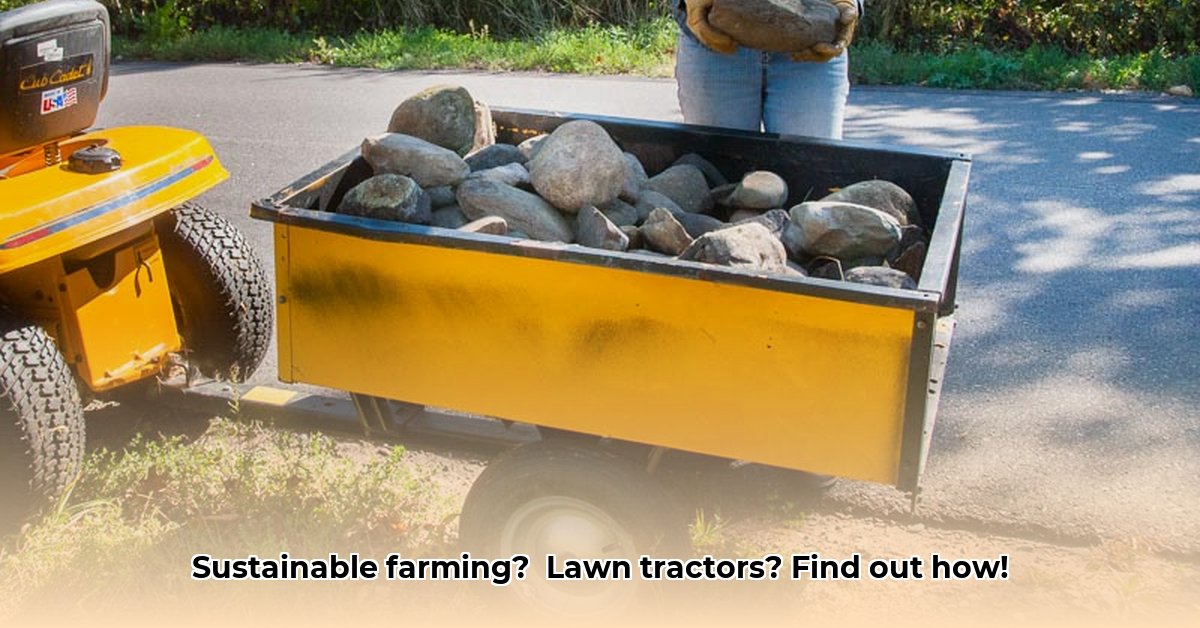
Choosing the right equipment is crucial for efficient and sustainable farming. Your lawn tractor trailer cart, often overlooked, significantly impacts your farm's environmental footprint and operational costs. This guide provides actionable steps to select and maintain a sustainable dump cart, minimizing your environmental impact while maximizing efficiency. For more information on dump carts, check out this helpful resource: Learn More.
Selecting a Sustainable Dump Cart: Material Matters
The material of your dump cart is the first critical decision. Steel carts are renowned for their strength and durability, capable of handling heavy loads. However, steel production is energy-intensive, resulting in a larger carbon footprint (the total greenhouse gas emissions associated with a product's lifecycle). Polyethylene (plastic) carts, while potentially less durable under extreme stress, often require less energy to manufacture, leading to a lower carbon footprint. However, the sustainability of your choice extends beyond the material itself.
- Consider recycled content: Look for carts made with recycled plastics or steel produced using sustainable processes. This significantly reduces the environmental impact associated with raw material extraction.
- Assess manufacturing practices: Research manufacturers committed to environmentally friendly production methods. Look for certifications or statements emphasizing sustainability initiatives.
Rhetorical Question: Isn't minimizing resource consumption a key step toward a greener future for our farms?
Quantifiable Fact: Studies show that polyethylene carts, when made with recycled materials, can reduce carbon emissions by up to 50% compared to conventionally produced steel carts.
Expert Quote: "The lifecycle assessment of a dump cart must consider the complete picture – from material sourcing and manufacturing processes to its end-of-life management," says Dr. Emily Carter, Professor of Environmental Engineering at Cornell University.
Beyond the Body: Optimizing Tire Selection and Usage
Tires significantly impact soil health and fuel efficiency. Larger, properly inflated tires minimize soil compaction, allowing for better water and air circulation crucial for healthy plant growth. Under-inflated tires increase rolling resistance, forcing your tractor to work harder and consume more fuel.
- Select appropriate tire size: Larger, properly inflated tires minimize soil compaction.
- Regularly check tire pressure: Maintain optimal inflation for fuel efficiency and reduced soil compaction.
Rhetorical Question: Can proper tire maintenance really make such a difference in fuel consumption and soil health?
Quantifiable Fact: Studies indicate proper tire inflation can improve fuel efficiency by up to 15%, reducing your farm's carbon emissions.
Expert Quote: “Choosing the right tire size for your terrain is just as important as the cart's material," states John Miller, Agricultural Engineer at the USDA.
Tractor and Fuel Efficiency: Powering Sustainability
Your tractor's fuel efficiency directly relates to your environmental impact. Fuel-efficient gasoline tractors are a step in the right direction. However, consider the long-term benefits of electric tractors, which dramatically reduce greenhouse gas emissions.
- Optimize tractor maintenance: Regular servicing enhances fuel efficiency and extends the tractor's lifespan.
- Choose the right tractor: Select a tractor with a horsepower appropriate for the cart's weight and your operation's needs.
Rhetorical Question: Wouldn’t switching to an electric tractor offer even greater sustainability benefits in the long run?
Smart Cart Usage: Optimizing Efficiency
Efficient cart management is key to minimizing environmental impact. Follow these steps to maximize your cart's sustainability:
- Load Smart: Avoid overloading by planning your loads to maximize efficiency and prevent unnecessary trips. Overloading increases fuel consumption and wear and tear on your equipment.
- Plan Routes: Minimize travel distance between fields to conserve fuel.
- Regular Maintenance: Regular cleaning, lubrication, and inspections will extend the cart's lifespan, reducing the need for replacements.
- Consider Alternatives: For smaller jobs, explore human-powered options like wheelbarrows to avoid tractor use altogether.
Quantifiable Fact: Proper load management can reduce fuel consumption by up to 20%.
Human Element: Many seasoned farmers recall the manual labor of previous generations, underscoring the importance of balancing modern technology with sustainable practices.
Cart Material Comparison: Weighing Your Options
The following table summarizes the advantages and disadvantages of common dump cart materials:
| Material | Advantages | Disadvantages |
|---|---|---|
| Polyethylene | Lightweight, durable, easy to clean, recyclable options | Less durable than steel for very heavy loads, susceptible to UV degradation |
| Steel | Extremely strong, durable, handles heavy loads | Heavier, more expensive, susceptible to rust, higher upfront environmental impact |
| Recycled Materials | Environmentally friendly, supports circular economy | Can be more expensive, availability may vary by region |
Long-Term Sustainability: A Holistic Approach
Sustainable farming is a continuous process. Regularly evaluate your cart's performance and its contribution to your overall environmental impact. Consider the entire lifecycle of the cart—from purchase and use to eventual disposal or recycling. Every step you take towards efficient and responsible use contributes positively to the environment and your farm's bottom line.